


The catalytic converter is a critical emissions control device that converts harmful exhaust gases into less toxic substances. Catalytic converters use precious metals to trigger chemical reactions that neutralise toxic exhaust gases before they reach the atmosphere. They are also a theft target and expensive to replace new. Here's what Audi owners need to know.
Key Takeaways
| Topic | Key Information |
|---|---|
| Precious Metals | Contains platinum, palladium and rhodium |
| Theft Risk | Theft tracks precious-metal prices |
| OBD Codes | P0420 (Bank 1) and P0430 (Bank 2) indicate catalyst efficiency below threshold |
| Replacement Cost | Our exhaust parts page lists used cats at about R3,000-R10,000 and new dealer units at R15,000-R30,000 (indicative) |
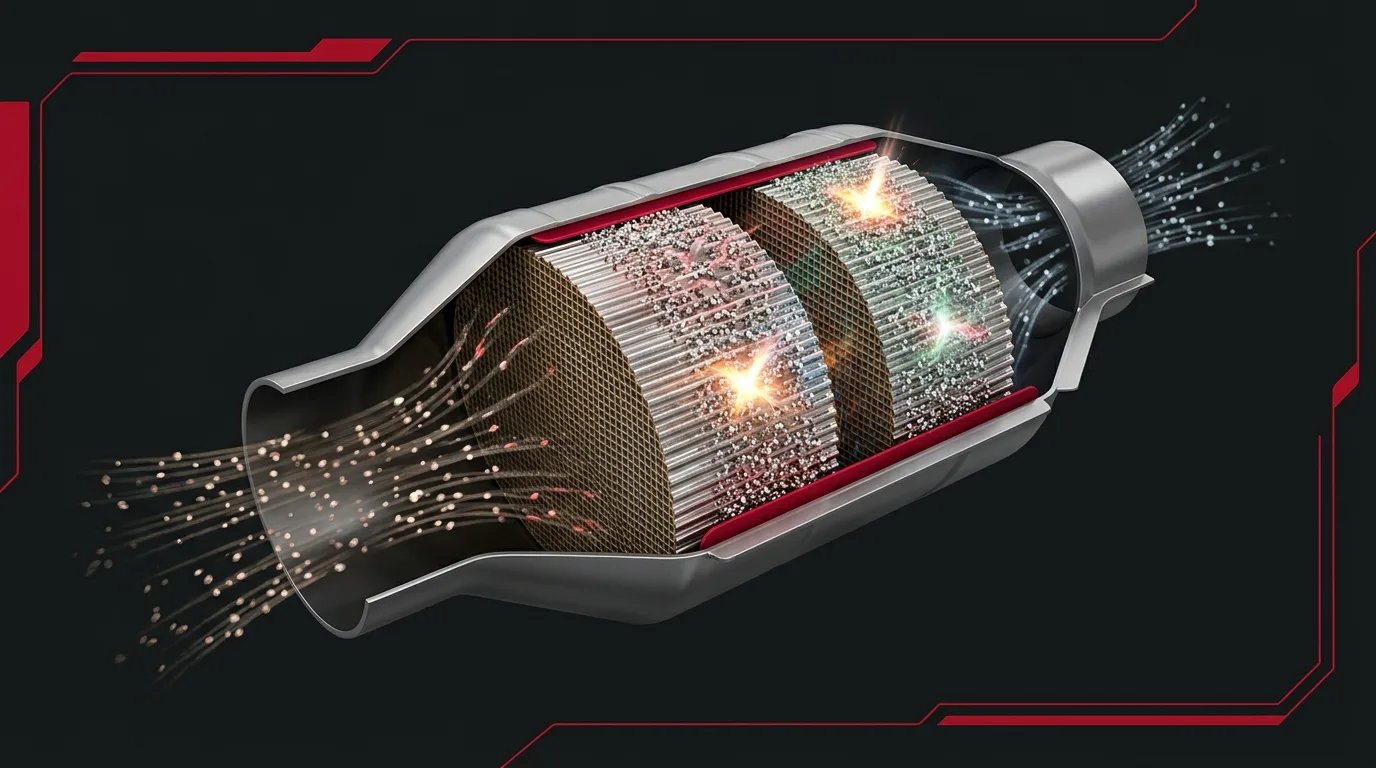
How Does a Catalytic Converter Work?
Inside the catalytic converter, a honeycomb ceramic structure is coated with precious metals (platinum, palladium, and rhodium). As exhaust gases pass through, three chemical reactions occur:
- Reduction catalyst — Converts nitrogen oxides (NOx) into nitrogen and oxygen
- Oxidation catalyst — Converts carbon monoxide (CO) into carbon dioxide (CO2)
- Oxidation catalyst — Converts unburned hydrocarbons (HC) into CO2 and water
Why Do Catalytic Converters Fail?
- Age and mileage — The precious metal coating degrades over time
- Engine misfires — Unburned fuel enters the cat and can cause overheating
- Oil burning — Engine oil contaminates and coats the catalyst substrate
- Physical damage — Speed bumps and potholes can crack the ceramic
- Coolant leaks — Internal coolant leaks poison the catalyst
Symptoms of a Failing Catalytic Converter
- Check engine light with catalyst efficiency codes (P0420/P0430)
- Reduced engine performance and poor acceleration
- Sulphur or rotten egg smell from the exhaust
- Failed emissions test
- Rattling sound from under the car (broken ceramic)
Why Catalytic Converters Are Stolen
The precious metals inside catalytic converters — platinum, palladium and rhodium — make them a target for theft worldwide, and theft rises and falls with metal prices. MoneyGeek reports a study of police reports from eight California cities that found a 10% increase in precious metal prices produces roughly a 20% increase in thefts.
Source: PMR — Catalytic Converter Value Source: MoneyGeek — Catalytic Converter Theft Rebound
Replacement Cost
New OEM catalytic converters for Audi models are expensive. Our exhaust and emissions parts page lists used Audi catalytic converters at about R3,000 to R10,000 depending on the model and engine, and notes that new units from dealers can cost R15,000 to R30,000. These are indicative ranges, not quotes.
Used catalytic converters from Audi Parts SA offer significant savings. We supply cats for popular Audi models including the A3, A4, and Q7.
How to Protect Your Catalytic Converter
- Park in well-lit, busy areas or in a locked garage
- Install a catalytic converter shield — aftermarket guards bolt around the converter
- Engrave or mark the converter with your VIN number for identification
- Install a tilt/vibration alarm that triggers when someone gets under the car
- Check your insurance — comprehensive cover typically includes theft, but check your excess
Related Reading
- Browse All Audi Parts — catalytic converters and exhaust components
- Understanding Audi's Engine Lineup — engine type determines converter specifications
- Cleaning Fuel Injectors — dirty injectors damage catalytic converters over time
- Contact Us — get a quote on a replacement catalytic converter for your Audi


