


Modern Audi engines rely on precise fuel injection to deliver optimal performance and fuel economy. Over time, fuel injectors can become clogged with carbon deposits and varnish, leading to a range of drivability problems. Here's how to keep your Audi's fuel injectors in top condition.
Key Takeaways
| Topic | Key Information |
|---|---|
| Common Symptoms | Rough idle, poor fuel economy, hesitation, misfires |
| Cleaning Interval | Professional cleaning recommended every 50,000-80,000km |
| Ultrasonic Cleaning | Most effective method; indicatively R200-R500 per injector |
| Direct Injection (FSI/TFSI) | Higher-pressure injectors that are more expensive to replace |
| Replacement Threshold | Consider replacing after 200,000km or if cleaning doesn't resolve issues |
Symptoms of Dirty Fuel Injectors
- Rough idle — The engine runs unevenly at idle speed
- Poor fuel economy — Clogged injectors disrupt the fuel spray pattern
- Hesitation during acceleration — Lean fuel mixture from restricted injectors
- Engine misfires — Incomplete combustion due to poor fuel atomisation
- Failed emissions test — Increased HC and CO levels
Fuel injection systems deliver precisely metered quantities of fuel into the engine. In modern direct-injection Audi engines, fuel is injected straight into the combustion chamber at high pressure, making the spray pattern and injector cleanliness critical for proper operation.
Cleaning Methods
Professional Ultrasonic Cleaning
The most effective method. Injectors are removed from the engine and placed in an ultrasonic cleaning bath. This dissolves carbon deposits without damaging the injector's delicate internal components. Indicative cost (not a quote): R200-R500 per injector.On-Car Cleaning
A pressurised cleaning solution is fed through the fuel rail, dissolving deposits while the engine runs. This is less effective than ultrasonic cleaning but doesn't require injector removal. Indicative cost (not a quote): R500-R1,500 for the service.Fuel Additive
Adding a quality fuel system cleaner to your tank can help maintain injectors between professional cleanings. Products like Liqui Moly or STP Fuel Injector Cleaner are widely available. This is maintenance, not a cure for severely clogged injectors.FSI and TFSI Direct Injection: Why It Matters
Audi's direct injection (FSI and TFSI) engines inject fuel directly into the combustion chamber rather than into the intake port. Gasoline direct injection offers improved fuel efficiency and power output by allowing more precise control over the fuel-air mixture.
However, direct injection also means carbon deposits build up on the intake valves, and the high-pressure injectors are more complex and expensive to replace. As Jalopnik explains, port injection washes the intake valve with fuel, "but direct systems skip this step and thus have no self-cleaning system" — and it notes the build-up can appear after as little as 20,000 miles (about 32,000 km).
Source: Jalopnik — Direct Injection Carbon Buildup
This is particularly relevant for A3 and A4 owners with 2.0 TFSI engines, which are direct-injection units.
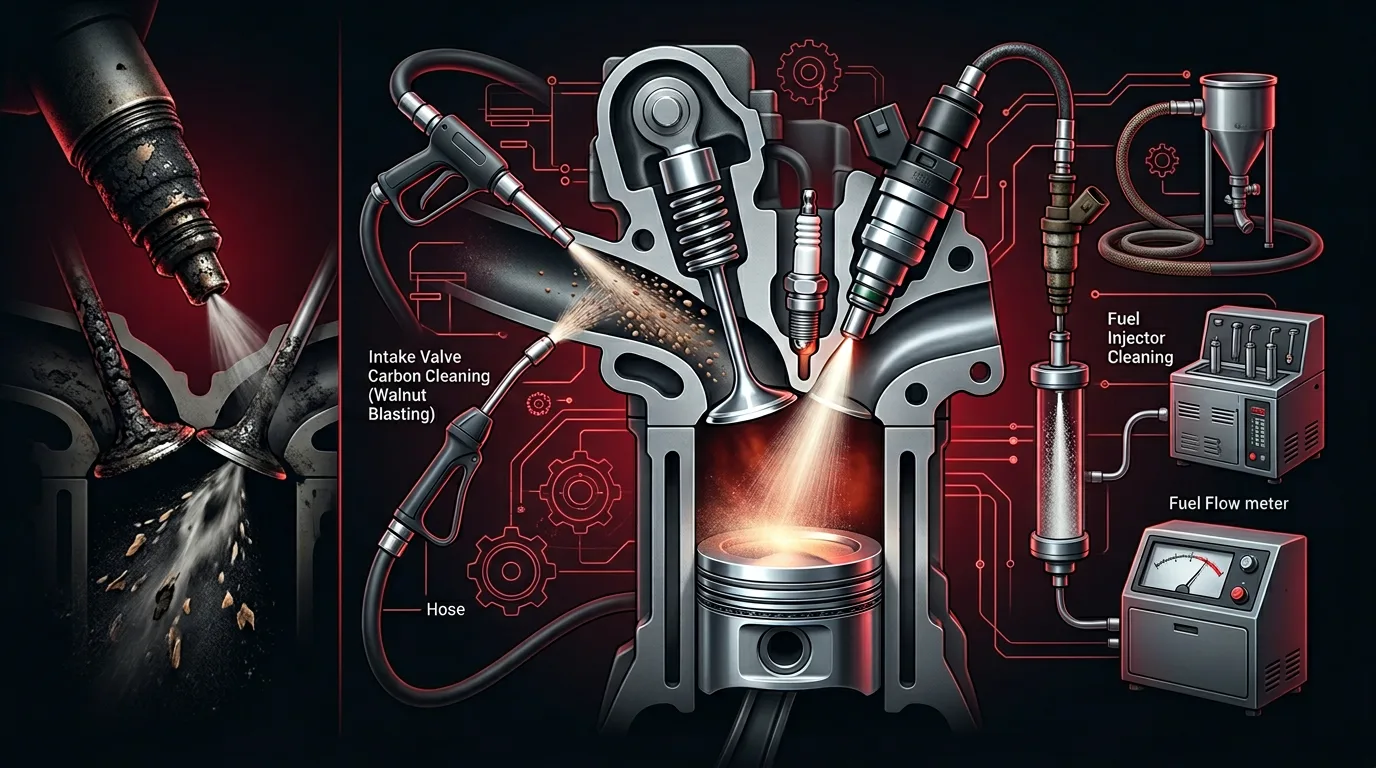
Intake-valve carbon is usually removed by a workshop with walnut-shell blasting; prices vary widely between workshops, so get a quote.
When to Replace Instead of Clean
Sometimes cleaning isn't enough. Replace your Audi fuel injectors when:
- They have over 200,000km and show wear
- Cleaning hasn't resolved misfires or rough running
- They're leaking externally (fire risk)
- The spray pattern is visibly distorted
At Audi Parts SA, we stock quality used fuel injectors for all Audi engines. Direct injection (FSI/TFSI) injectors are particularly expensive new, making used replacements from our yard an excellent value proposition. Browse our engines and engine components for complete fuel system parts.
Related Reading
- Used Audi Engines for Sale — complete engines with tested injectors included
- Audi Parts Catalogue — fuel injectors, fuel pumps, and fuel system components
- Understanding Audi's Engine Lineup — learn about FSI, TFSI, and TDI injection systems
- What Is a Catalyst in a Car? — dirty injectors can damage your catalytic converter


